
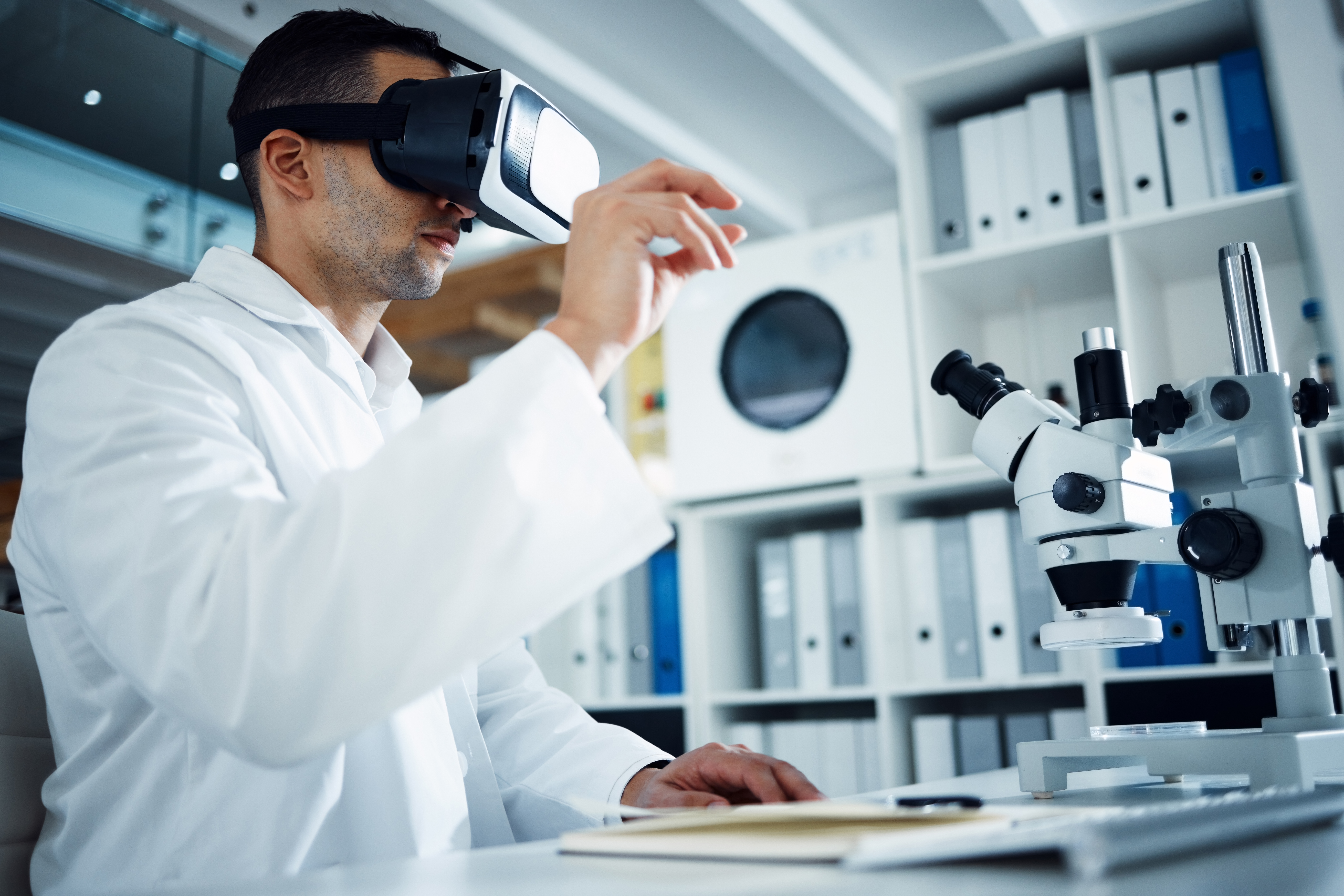
AI promised a drug discovery revolution. Biology had other plans
For years, AI has been hailed as the future of drug discovery. Headlines promised faster cures, cheaper development costs, and a pipeline of medicines that could revolutionize healthcare. Venture capital poured in, startups sprouted, and pharmaceutical companies raced to integrate AI into every stage of drug research. On paper, it looked like AI could finally solve one of the oldest challenges in medicine: finding effective new drugs faster.
But reality has been more complicated. While AI has made some impressive contributions, the grand promise of instant breakthroughs has largely run into a wall—the stubborn complexity of human biology. Faster data analysis, more predictive models, and huge molecular libraries haven’t magically turned into more approved drugs.
The allure of AI in drug discovery
The appeal of AI is easy to understand. Traditional drug discovery is slow, expensive, and risky. A new medicine can take over a decade to reach the market, and the majority of drug candidates fail during clinical trials. AI promised to change that by helping researchers:
- Screen molecules faster: AI can analyze millions of potential compounds in days, a task that would take humans years.
- Predict outcomes better: Machine learning models can identify molecules likely to bind to a target protein or predict toxicity before testing in the lab.
- Reduce costs: By narrowing down candidates early, AI could save money that would otherwise be spent on doomed trials.
It sounded like a perfect solution. Investors poured billions into AI-driven biotech startups, and pharmaceutical companies raced to adopt the technology, often touting AI as a “game-changer.”
Early wins that show promise
AI has indeed moved the needle in some areas. For instance, companies have used machine learning to identify new molecules for diseases with high unmet needs. Generative AI models can design novel compounds with desirable properties, something that would have taken years using traditional chemistry. AI has also improved drug repurposing efforts—finding new uses for existing drugs—by analyzing complex biological datasets.
In some cases, AI has accelerated the preclinical phase of drug development. For example, predicting protein structures or molecular interactions has become faster and more accurate, thanks to models like AlphaFold. These breakthroughs have helped scientists understand biology in ways that were impossible a decade ago.
Why AI hasn’t yet revolutionized clinical success.
Despite these wins, the overall impact of AI on bringing new drugs to market has been more limited than expected. Faster screening doesn’t automatically translate to higher success rates in clinical trials. Many AI-designed candidates fail when they reach humans, and here’s why:
- Biology is messy: Humans aren’t simple machines. Even if a molecule binds perfectly to a target in a lab test, it might behave differently in the body due to metabolism, immune responses, or interactions with other proteins. AI models can’t yet capture all these layers of complexity.
- Data limitations: AI is only as good as the data it’s trained on. Most biological datasets are incomplete, noisy, or biased. For example, lab experiments might focus on a narrow range of cell types, missing effects that appear in the wider diversity of human tissues.
- Clinical trials are the ultimate test: Preclinical successes don’t guarantee safety or efficacy in humans. AI can suggest which candidates are promising, but it can’t fully predict the unpredictable nature of real-world biology.
- Integration challenges: Many pharmaceutical companies adopted AI tools without fully changing workflows. A faster molecule screen doesn’t help if other bottlenecks—like chemical synthesis, formulation, or regulatory hurdles—still slow progress.
Where AI Is truly making a difference
Even with these limitations, AI is starting to reshape parts of drug discovery in meaningful ways:
- Target identification: AI helps identify new proteins or pathways linked to disease. This can guide researchers to novel approaches rather than relying on well-trodden targets.
- Drug repurposing: Using large datasets, AI can suggest existing drugs that might work for other diseases, sometimes uncovering options faster than traditional research.
- Precision medicine: Machine learning can analyze patient data to predict who will respond to a treatment, improving trial design and reducing wasted effort.
- Automation in the lab: AI-driven robotics and predictive models streamline experiments, freeing scientists to focus on interpretation rather than repetitive testing.
These contributions are real and measurable. They don’t guarantee a miracle drug every year, but they do make the research process more efficient and informed.
The limits of data vs. the complexity of life
At the heart of the AI “revolution that didn’t happen” is a simple truth: data can only take you so far. Biology is not fully deterministic, and human bodies vary in ways that are hard to model. AI can predict patterns, suggest possibilities, and prioritize experiments, but it cannot yet replace the fundamental trial-and-error that defines medicine.
In some ways, this is not a failure—it’s a reality check. Drug discovery was never going to be solved by faster computations alone. The promise of AI isn’t instant cures; it’s smarter decision-making and faster iteration. When combined with human insight, careful experimentation, and regulatory rigor, AI can still accelerate progress—but it can’t make the hard work of biology disappear.
Looking forward
The next decade will likely see a more balanced view of AI in pharma. Investors and researchers are learning that hype needs to be tempered with realism. Instead of promising a revolution, AI’s role is becoming clearer: it’s a powerful assistant, not a magic wand.
By focusing on areas where AI adds real value—target discovery, molecular design, and precision medicine—drug developers can increase efficiency without overpromising outcomes. And as datasets improve and models become more sophisticated, AI’s predictive power may grow, but it will always be constrained by the inherent complexity of human biology.
In short, AI hasn’t failed—it has just reminded us that biology is smarter than any algorithm. Faster screens, predictive models, and big data can help, but curing disease will always require careful science, patience, and a healthy respect for the unpredictability of life.
editor's pick
Subscribe to the Healthcare Digital Digest newsletter
Subscribe to Healthcare Digital Digest for thoughtful insights on people strategy, workplace culture, talent tech, and the future of work, delivered straight to your inbox.
